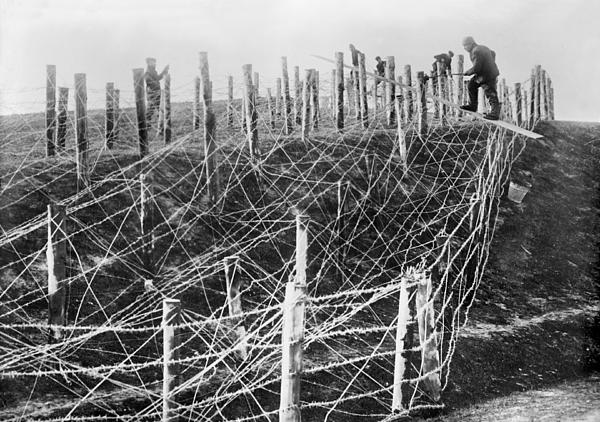
Showing posts with label Forest of Fences. Show all posts

Wednesday, May 21, 2025

White Tower - The Curse

The Lands of the White Tower are infected with a terrible Curse. Invisible, untraceable, transmitted from any thing living and dead, tilled into the land itself. The Curse causes things to grow strange and monstrous, mutinous against man, and irreparably wild. As the old spirits of nature establish their domain among the Cursed lands, so wanes the domain of man.

The deeper towards the Tower one delves, the worse the Curse gets. Certain objects and creatures carry it particularly well. Unseen it spreads between proximal things. The longer you spend around a Cursed person or thing, the more it spreads to you.

The Curse affects biologies differently. Contrary to rumor, though, it spreads at equal rate.

Biology

Stage 1 

(1-2 Units)

Stage 2

(3-6 Units)

Stage 3

(7-9 Units)

Stage 4

(10-29 Units)

Stage 5

(30-59 Units)

Stage 6

(60+ Units)

Human or Dragon

Nausea

Fatigue, Headache

Mutation

Greater Mutation

Zombification

Death

Elf

Fatigue

Drowsiness

Weakness, Frailty

Visible Aging

Infirm

Death

Dark Elf

Agitation

Vomiting

Bloodthirstiness

Hallucinations

Vampirism

Nosferatum

Dwarf

Muscle Stiffness

Loss of Smell

Loss of Hearing

Loss of Pain

Petrification

Death

Halfling

Thirst

Fever

Hunger

Unquenchable Hunger

Ghoulification

Ghastification

Orc

Dizziness

Vertigo

Weakness

Shrinking

Diminution

Disappearance

Tiefling

Temptation

Addiction

Withdrawal

Uncontrolled Hedonism

Fall to Vice

Super-Ego Death


HUMANS
Nausea, fatigue, headache, fever, then mutation. Extreme cases of mutation are rumored to have the subject's flesh melting like a candle, assimilating and melding with other creatures like The Thing, distributing their essence as they go and likewise taking it upon themselves.

ELVES
Fatigue, weakness, frailty, drowsiness, then visible aging.

Few have seen an old elf. They don't wear age gracefully like humans do. Elves magically aged, for this is the only way they can be aged, appear monstrous. Their features get sharper, more exaggerated. Heads elongate, chins narrow, ears extend. They seem more like insects than elves if too far gone.

DARK ELVES
The Curse gets in their blood and kills it. As the blood dies, they thirst for more. When it gets in the bones it files their teeth and nails. They hear the call of the wild, of bats and wolves that live in the cursed lands. The Sun, which merely blinded, now burns.

DWARVES
Stiffness, loss of smell, blindness, loss of sensation, then petrification.

It's rumored that somewhere within the gaze of the White Tower there lies a forest of statues - a lost hold of Dwarven kin lost to the Curse. Texts acquired from explorers into the forest revealed that they were fleeing some dark entity, and that the risks of the Curse were less than that of staying.

HALFLINGS
Thirst, fever, hunger, then the unquenchable hunger.

Ghouls are a blight upon the nearby lands. Immortal, ravenously hungry, and prone to seek out civilization, thereby spreading the Curse. Local sheriffs and constabularies are keen to address ghoul problems quickly, lest their influence spread.

ORCS
Dizziness, weakness, vertigo, then shrinking.

It would be comical, were it not so serious. Orcs shrink, like someone was slowly isometrically transforming them down. One of the greater mysteries of the curse, no doubt.

TIEFLINGS
Temptation, addiction, withdrawal, then the fall to vice.

The strangest of the Curses effects befalls the Tieflings, who suffer no physical maladies but exclusively illnesses of the mind. The Curse amplifies any presently-existing vices the Tiefling carries, cranking one or more of them into overdrive. Addictions become screaming, withdrawals become impossible to ignore, internal demons become proudly displayed. A fully fallen Tiefling becomes an Id-Creature, a slave to their fleeting desires and needs.

Monday, August 12, 2019

The Summer Bards

It begins with a simple flaccid horn from the woods - the herald, sounding as a prepubescent child would play the trumpet, more spit than sound. It then, accompanied by another, joins its second in a cacophonous duet, like a toddler pounding her open-fisted hands upon a piano to enjoy the reaction more than the sound.

Then comes a third, and a fourth, and then an exponential increase in fumbled music so loud that cows a county away turn tail and flee from the sound, and dogs begin angrily barking a hundred leagues away. The noise of incompetent music rises to such a volume that the nearby peasants of the village must fill their ears with wax and encase their heads in wool at the peak of summer heat, least they go deaf.

These are the Summer Bards, and they are universally hated and despised. They arrive but once a year, converge but once a generation, and cause such horrid noise from the wood that the very agents of Nature and Civilization, in an impossible alliance, join forces in their extermination.

Welp, time to go a-murdering!
Source
An Annual Concert
For every man, every occurrence is different. One year the Bards will arrive with chitinous drums sounding of bashing pots. Another, with flutes of caliber akin to elementary classes' recorders. Still yet, they may arrive screaming in pitched voices like their football team just won a game, or with wash-boards that cry like dried-out cats. For every instrument known to man and Gentle Kin the Bards may replicate, though only the eldest of elves have witnessed every iteration.

The Summer Bards come in generations of duration numerological. Certain kinds will appear every 3 or 5 years. Some 13 or 17 years. Other 29 or 41 years. Others, 111 or 2083. Always Prime Numbers. Generally, the longer the wait, the more spectacularly annoying the Bard.

Some years they don't arrive at all, and in these times there are festivals in the fall to celebrate their not-coming, filled with decent music and beer and pumpkin-based foods, and most importantly NO DRUNKEN SINGING and NO ERRANT WHISTLING... Unless it's in good tune, of course.

And sometimes the emergence of the Bards is manageable. Maybe only one type of Summer Bard will emerge in the wood, one with a quieter instrument and in smaller numbers. One that's easily culled by mere Nature.

But sometimes it's not. Sometimes there is a convergence of the breeds of Bard, and in these times folk from far and wide will arrive, hearing the horrid mating calls of ten million incompetent flute-players, drum-beaters, and well-whistlers, to partake in their massacre.

The Great Audible Cleansing! Death to the Bards! Partake in the Holy Chordophonic Crusade, and the Pope-of-Good-Taste will grant you clemency for your sins!

And so they come, from far and wide, with peasant pitchfork and with ear-muffed horse and lance, to kill every last Summer Bard.

Murdering Bards
It's not so difficult to slay a Bard. Though they be as big as a full-grown man, and have sharp teeth and strong legs, each one lives in the waking world but for a few weeks, in which it has little time to learn and no time to develop survival instinct. They tend to bumble about, playing their embedded instruments, climbing on trees and falling into ponds, oblivious to the obvious threats. They are more concerned with mating than with the genocidal peasants and adventurers nearby. A single untrained peasant can slaughter two dozen of them with the proper motivation (and their noise is good at producing that). Though, occasionally one of the Bards may get lucky!

And this is what the entire Summer Bard species depends upon: producing so many Bards in one giant bardic wave that it absolutely overwhelms all of their predators, that despite their complete un-coordination and utter lack of survival instinct and dexterity, that there are simply too many of them to kill all at once.

"Kill the Bards, burn their shells!
Send them back to Seven Hells!"

Doughty - Robert Kett leads the Peasants Revolt
Many, many, many will die - eaten by giant rocs and basilisks; skewered by angry cloud giants, peasants, and wandering knights; and drowning in ponds and mud puddles from their own sheer clumsiness.

This makes for strange scene - for all predators will have more than their fill of high-protein Bard, leaving them somewhat stuffed and torpid. You will see giant bloated snakes sunbathing next to giant eagles. You will see peasants resting next to basilisks and manticores. You will see natural enemies forsake their grudges in a feast of overabundance. For this reason more than mere rabble is drawn - it presents an excellent opportunity for zoological study, hence procuring all matter of alchemists and academics.

However, despite all this slaughter, some Summer Bards will get lucky, stumble upon a mate, and reproduce the next generation by the thousands.

They leave quite a mess, too, when they're finished (dying, that is). By the time the last gurgle-trumpet-as-loud-as-a-wind-tunnel has died down, there will be hundreds of thousands of man-sized Bard corpses laying about, and millions of their skins, which they shed to reach maturity. It's gross. It's a public hazard. Nobody wants to enter the wood after that, except wild dogs, corpse eaters, ghostly hermit crabs, and necromancers. Thankfully, the corpses of the Summer Bards do not produce much of a stink.

A Mountain of Corpses. An Ocean of Shells.
Folk have tried to find good uses for all those leftover Bard shells. They've tried making armor, but it's a bit too brittle and thin. They've tried crushing it to powder, using it as medicine, but the most it's good for is making your stomach gurgle. At best, folk have used the shells for decoration - they use them as cast molds, or like lamps for fires, as they seem to be at least a little flame resistant.

The Corpses, though... For them a use is found. There is little energy left after a Bard slaughter to resist the Necromancers that follow, and zombie Bards are far scarier and more threatening than their living cousins. Necromancers scoop them up like candy, gaining potentially dozens, if not hundreds of servants in a single night. Sometimes, if they're ambitious, enough minions to march on the living, playing their instruments of dread and torture. The Cacophonic Crusade.

Thankfully, though, even the Necromancers are limited by their resources, for there are far too many corpses than even they can handle. That, and the height of summer is fortuitously poor climate for necromancy.

Summer Bard
No Appearing: 1-300
AC  Unarmored   HD 0   HP 1   Dex 3
1d2  Clumsy Flailing Limbs
Uncoordinated: Summer Bards get disadvantage to all actions.
Fumbling: Summer Bards can only perform actions and movements every other Round.
Deafening Cacophony: Anyone within X feet of the Bards is considered Deafened, where X = the # of Bards present. Unless ear protected, they must also Save vs. Petrification or become permanently Deaf.

Summer Bards will not help each other in combat, or notice danger until it is already upon them. Each of them will die of natural causes within 1d4 Weeks.


Summer Bard Characters

Art by Robin K Herman
Ahhh... I see now. You want to play as a Summer Bard? Well, good on you! They are the Bard-est of Bards, after all. Who wouldn't want to play a living Dungeons and Dragons meme with a month-long lifespan? (If they're lucky!) Here's how it works:

1. You are a Bard.
However Bards work in your system, you get to be that.

2. You always start at Level 1.
Regardless of how far along in a campaign you are. No exceptions.

3. Your Dexterity and Wisdom are 3.
Or, the lowest possible score, always.

4. You get one random instrument.
This instrument is embedded in your body. You probably suck at playing it!
You can use this instrument to attempt to Deafen everyone within 30ft.
Save vs. Petrification. Unlimited use. It's like:
1) Inane Screaming Lute
2) Jangling Trash Bag Full of Empty Beer Bottles In Garbage Disposal
3) Out-of-Tune Whistling But It's 150 Decibels
4) A Thousand-Thousand Elementary School Recorders
5) Thigh Cymbals But Instead Screaming Goat
6) Microphone Feedback But Never Gets Quieter

5. You gain experience like a normal party character.
You may even reach Level 2!

6. Flight
Oh, I guess you get Flight, too.

7. You die of natural causes in 1d4 Weeks.
Make good use of that time!

8. If you find a mate, and then do the deed, and said mate isn't murdered...
There will be about a thousand more of you in 3d10 Years time! Hooray!

Wednesday, June 12, 2019

The White Tower

I wanted to revisit the Forest of Fences (and the follow-up post), largely because I want to toy around with Depth mechanics (a la Ynn, Made In Abyss, etc.). And, because a certain popular HBO miniseries has given me the rare fit of inspiration. First, the concept post. Then the nitty gritty TBD.


Ask The Elf: "Why do men seek The White Tower?"
He will reply, rhetorically: "Why do men seek towers? Or why do men seek this one?"
Ask again: "Why that one?"
Reply: "The answer to both is the same."
"And that is?"
"I am not a man. I cannot know."

~~~~~

Within the Forest of Fences lies a white tower. One sees it miles away, catching the sun like a beacon. It refracts like a lighthouse at sunset - calling the adventurous, beckoning with promise of power and riches. 'What marvels might the Tower hold?' say they, unknowing of the danger. 'What treasures might be found among the ruins of the sarcophagus at the Tower's feet?'

The treasures are all cursed. The lands around the Tower are a wild and cursed as well.

Cursed with the disease-not-seen. It's contagious. It kills everything it touches, and everything that touches the touched. It does not do this immediately. It can take days, weeks, or even many years to manifest, but all those who venture to the Tower and return alive eventually succumb to the curse. Their insides are eaten away bit by bit and they will never know why. Sometimes it effects even those near the Cursed - children in particular. The Elves know why, but they won't tell. They would rather have the subject be taboo than a known risk.

There are no predators in the lands around the Tower, at least not for men. There is risk of injury, to be sure, but there are no monsters. Unless, that is, you bring them with you.

Then why? Why go to the Tower, knowing the risk? Well...

Perhaps you don't know the risk. Perhaps cursed objects still sell well. Perhaps the demons of curiosity usher you hence. Perhaps there's something, or someone, there that you want.
Perhaps you cannot un-hear the call of the White Tower. Not until you see the madness at its depths.

Though strange sights surround the White Tower.
Source

No hostile monsters whatsoever. Maybe hostile people - scavengers like you. Perhaps the errant natural trap here and there. The main threat is the Curse. The closer you get to the White Tower, the worse the Curse gets. The DM should never explain the Curse's mechanics, only telegraph through encounters and the environment that things are getting worse.

The area is divided up into zones, based on proximity to the tower (roughly, following topography and such). Several locations are keyed to each Zone, each one working as a kind of subsetting Depth. All navigation is done in terms of the White Tower. Do you approach the tower? Do you retreat from it? Any other movement, tangential or otherwise, keeps you in the same zone.

Zone Level
The Environment
Encounters
Salvage/Loot Found Within
Maximum Lifespan*
1 - Red
Old riverbeds and scavenger paths. The Curse around the former far worse than the latter.
Curse Merchants, Scavengers, Normal Wilderness Encounters**
What Washes Downstream, Little Else
10,000 Years
2 - Orange
Ancient towns long picked clean. Fields and woods. Old Elf-roads and hidden villages.
Scavengers, The Elf, Forsaken Living Trees
Elven Trinkets, Weapons,
Trade Goods
1d4 x 1000 Years
3 - Yellow
Ruins taller than trees, living spaces, great punctured cubes sagging with age.
Scavengers, The Elf, Wolf-dogs
Yes/No Curse Detectors, Children’s Toys, Jewelry,
Rare Metals, Cursed Advanced Medicine
1d4 x 100 Years
4 - Green
Young Forests, lush with green in spite of the Curse. Strange creatures thrive here. Nothing grows old.
Scavengers, The Elf, Majestic Watchers, Intelligent Insects, Marsupials, Pygmy Boars
Rare Beasts, Cursed Seeds, Dead Salvagers, Buried Salvager Caches
1d4 x 10 Years
5 - Blue
Industrial Ruin, a concrete jungle littered with ancient machinery. Fences lattice the ruin like siege trenches.
Scavengers, The Elf, Cleaning Engines, Fences
Heavy Machinery,
Low-Capacity Curse Detectors, Ancient Fuel
1d4 Years
6 - Indigo
The Outer Sarcophagus - a tomb for ancient armies. Meticulously clean, except where intruders have tread.
Rare / Dangerous / Curse-laden Scavengers
Automatic Firearms, Grenades,
Body Armor, (Cursed) Curse-Protected Suits, Ultra-batteries
2d4 Months
7 - Violet
The Middle Sarcophagi - tomb built upon tomb, each less grand than the last. Monuments to greater and lesser Ages.
The Meteorite (rare encounter), Nothing
Robotics, Capacitors,
Scuba Gear, High-Capacity Curse Detectors
1d4 Weeks
8 - Black
The Final Sarcophagus - It is hot. Demon light pours from the Portal. Madness. Oblivion.
Nothing
Discordant Pipes, “Demon” Bodies, Curse-stone.
1d4 Days
*Assuming you don’t immediately turn back once you enter the zone. This reflects spending at least one travel turn in the area. It also assumes you have no protection from the Curse. **Whatever the White Tower zone is embedded within.

Source

The Curse

It should be pretty obvious at this point what the Curse is and what it's trying to replicate. The only thing I suggest for this is to not go the cartoon-y mutation route. I mean... I guess you could, but then you'd need to find another point to this whole nega-zone. Just keep in mind that the initial pull is Huge Risk = Huge, Dangerous Reward. The players and characters should know this. You can find hyper batteries from a thousand years ago, cursed rocks to slowly assassinate your enemies, and assault rifles in an age of spears; however, you'll die of 'natural causes' a lot sooner than normal. Power and Riches for Life. Having, instead, Power and Riches for Growing a Third Functional Arm is less of a conscious old-school risk-reward tradeoff and more of a win-win.

Effects of The Curse:
  • For Zones 1-5, death manifests in the form of lethal, unpreventable Cancer.
  • For Zones 6-8, the symptoms are worse.
  • Protection is gauged in terms of how many categories up the Maximum Lifespan scale it boots you. Category 1 Protection (e.g. respirator) effectively shifts you up by one zone. Category 2 Protection (e.g. a lead suit) shifts you up two zones. Perhaps Magic Armor can boot you up three.
  • Natural traps and hot spots, as well as certain Cursed items, will produce an effect similar to a particular zone when interacted with for extended time. (For instance, falling into a Cursed pool of water unprotected in the Yellow Zone might be the equivalent of entering the Blue Zone. Drink the water, and it'll be like being in the Indigo Zone.)
  • Effects of The Curse are unlikely to manifest during the lifetime of a campaign. It's really not until you get to around zone 5-6 that symptoms start to develop within an actionable amount of in-game time. And by that point, hopefully you've provided enough hints and such that the players (and characters) understand what's at stake.

Friday, October 12, 2018

Forest of Fences Mechanics

Link to the conceptual post: here.

The Forest of Fences is intended to be a diversion or a roadblock, not a full adventure (yet). It could turn into so if some proper adventure locations are added to it. May be a future post.

Navigation
Every six hours the navigator of the party must make a normal Intelligence check. On success, the party goes the direction they want. On failure of 5 or more, they head away from the center. Normal failure and they effectively walk in circles.

Each success increases Depth by 4. Depth starts at zero, and can climb to a maximum of 20. If you press onwards beyond that (20), you pass through the middle of the forest, and Depth starts to decrease.

Broken fences will regrow in 12 Hours. Climbing a fence completely unassisted is a normal climb check. Doing it assisted will generally result in automatic success, unless you've got some deadly hazard. The view from the tops of fences can only give you brief insight into which directions lead towards and away from the center. If they do this give them +2 on Navigation rolls.

What Fence Is In The Way?
Roll 1d12+Depth every six hours.

1-4. Wooden picket
    Two feet higher than tallest party member. Soggy rotted wood, unpainted.

5-6. Hedge Row
    Three feet thick, more leaves than trunk.

7. Reed Lattice
    Flimsy and dry. Makes good kindling.

8-9. Wood Palisade
    Sharpened stakes at top cause 1d8 damage on fall or significant force.

10. Bamboo Wall
    Grows quickly when planted: 1ft/hour.

11-12. Barbed Wire Fence
    Dexterity check when possibility of entanglement. Failure: 1d4 damage and restrained.

13. Cobblestone Wall
    Falling apart at the seams. 5ft high. Plentiful source of loose rocks.

14-15. Wrought Iron
    Iron spikes at the top. 8ft high. Iron poles spaced out 10cm apart.

16. Mushroom Stockade
    Thick rubbery shrooms, red and white striped. They grow as tall as a man, and sometimes cradle their faces in the obese spiraling petals.

17. Bamboo Thicket
    Quick growing and thick. Replaces itself in only 10 minutes. The leafiness hides a Chinese fingertrap of latticed stalk.

18. Chain Link
    Easy to scale, through it's 15 feet high.

19. Stage Curtain
    Something lurks behind the curtain, always. 5 in 6 chance of encounter. 1 in 6 chance of treasure.

20. Rose Hedge
    Thorny hedgerow covered in early spring rose bulbs. As Barbed Wire Fence, except that drawing blood (dealing damage) causes 1d4 roses to bloom. That many random players must Save vs. Magic or pick the roses, causing them to shrivel and rot instantaneously. Those affected cannot romantically love again until they have died at least once.

21. Bone Stakewall
    Femurs, mostly. Consciously arranged and crosslinked. Sometimes there is a biting skull embedded in the network. As immobile skeleton. Can be turned as 3HD undead.

22. Stacked Concertina Wire
    Dexterity check when possibility of entanglement. Failure: 1d6 damage and restrained.

23. Stranglevine Lattice
    Grasping and choking vines with a life of their own. As a large Assassin Vine, or system equivalent.

24. Corpse Concrete
    Cemented agonized corpses. Save vs. Poison if you touch it. Fail, and you will flee every battle for 1 day. Clerics can feel their fear. Can be turned as 5HD undead.

25. Subliminal Noise Hedge
    A wall of speakers, quietly whispering in a low pitch subliminal commands to turn back, masked in a leafy hedge. Save vs. Magic or be gently Turned as an Undead would, without the panicked rush. Most of the speakers don't work, but some electronics could be salvaged from the working ones.

26. Electrified Razor Wire
    Chain link with a sourceless shock. Dexterity check when possibility of entanglement. Failure: 2d6 damage and restrained. 3d6 damage for metal armor wearers.

27. Bayonet Wall
    Thousands of bayonets pointing laterally and vertically. Still sharp. Applying significant force or failing a Dex check to climb will deal 1d10 damage.

28-29. Electrified Barbed Wire Thicket
     As Electrified Razor Wire, but at any given point the thicket is is 3d10 yards thick.

30-32. Kill Zone
     A gap in the impenetrable thicket leads to a self-contained grove. At last you have reached the center. No sounds but the dry grass crinkling under your boots.

Then there's thunder-crack, like all the gods released all their lightning in one salvo. Barbed wire thicket hides a machine gun nest with near-flawless field of view. Nobody mans the bunker. Were one to clear out the death-brush and penetrate the concrete walls one would only find a smoking (but intact) machine gun.

The ambush is as 3 salvos from the Machine Gun below before it runs out of ammo.


Encounters (1d8)

Few things live in the Forest of Fences. 1 in 6 chance of encounter every six hours.

1-3. Living Fence
Roll on the Fence table. That fence is alive. It moves, attempting to corral away from the center of the forest. If attacked it will retaliate.

AC Cannot Miss  HP 20 per section   HD 4   Speed Half Human
2d4 Strangle + "Significant Force" Damage.

  • Animated Fence - Attacks cannot miss against the Living Fence, as it's as big as the broad side of a barn. Physical damage reduced by material type. Plant/Wood: 2 ; Stone: 5 ; Thin Metal: 3 ; Thick Metal 6
  • Entangle - Fences get a free grapple attempt at +6 upon successful attack.
  • Segmented - Each 10ft section of fence has 20HP. If destroyed the section will disintegrate, regrowing in 2d6 Rounds.
  • Tethered - Living Fences cannot move 40ft beyond their original parellel.
4-5. Little Fey Girl
A little fey-girl tends the forest. Looks around 5 years old, hopelessly tangled hair and innumerable cuts on her arms and legs. She saw this forest conceived and born from the madness of War, and is small enough to squeeze into the cracks. She might help you, if you can prove you're not a monster. This isn't easy. You look just like one.

She can treat the fences as merely difficult terrain. If threatened she can even make them into Living Fences.

AC As Chain (High Dex)  HP 12  HD 2   Speed Normal

  • Animate Fence - A poem of sufficient innocence she whispers to the fence will animate it. This takes 1 Round, about a limerick worth of rhyme.


6. The Good Neighbor
A man, from where nobody is sure.

He replies: "The other side of the hedge", if asked. Dressed comfortably for the chilly morning.

He is heard, at first, a fence yonder. A gentle hyup-sound for heavy lifting. He is tearing down a fence, whichever one happens to be next. His arms are burly - he can tear down the fences with only his hands. Why is he tearing them down?

"There are no cows here." He'll reply. He has homemade blueberry wine to share.

He is an elf.

7. The Eyes of Madness
Eyes in a flooded hole in the ground. Muddy white teeth grinning with the madness of war. Lowest Wisdom party member must Save vs. Magic or be Cursed. When this happens there is a very loud sound, like a misfiring gun. Every 12 hours consult the table for symptoms (1d8):
  1. Attempt Military Suicide. If you have swords, stick them in the ground or ask someone you trust to hold them out. If you have knives, cuts your wrists. Poison, drink it. Gun, shoot yourself, or ask someone to do it for you. Your companions have 2 Rounds to stop you.
  2. Scared of loud noises. As Fear spell whenever there's a surprising loud noise.
  3. 1000 Yard Stare. Next 1d4 times someone tries to talk to your character they cannot respond, only gaze into the distance.
  4. Blindness.
  5. Hallucinations. Of the last person you talked to.
  6. Stomach Cramps. Painful, -2 to all rolls.
  7. Fidgeting. Disadvantage on ranged attacks.
  8. Cannot sleep.

Talking to the affected about anything has a 1 in 2 chance of alleviating the curse for 12 hours, after which symptoms will reappear.

8. Steel Juggernaut
A juggernaut-beast of fire and metal sleeps in the thickest brush, silent as the dead. With a horrible cataclysmic screeching it comes to live, trampling the most dangerous of fences with a rolling thunder. It is utterly misanthropic, attacking indiscriminately with steel and fire. There is soft flesh to rend, though one must pierce the thick metal shell. It laughs a distant laugh, like a mad man trapped below the ground.

Mark I "male" tank. One operational QF 6-Pounder Hotchkiss gun on the right side. One operational machine gun in the front. It can do nothing to those on the left and behind, except turn or try to crush them under the treads.

There is a crew, but they are dead and mad. Treat as Wights with 1HD, immune to Turning while they're inside the tank. They cackle and taunt obscenities, reveling in the scream before the body is crushed or set aflame.

5 Treasures inside the Juggernaut. They smell like old soiled laundry and motor oil.

AC Plate and +2 Shield  HP 90   HD 15   Speed Normal*
Special Attacks
  • Tank Controls - Steel Juggernaut may either turn or move in a turn, but not both.
  • Choking Fumes - Those downwind (roll 1d8 if unsure of direction) of the Juggernaut must Save vs. Poison or be Blind and have half movement for 1 Round.
  • Machine Gun - Special Attack. Cannot perform if moving. Attack as +1 Longbow, ignores armor. Save vs. Death or die. 2d10 damage on save. May only use this attack against targets directly in front.
  • 6-Pounder - Special Attack. Cannot perform if moving. 100ft line. Save vs. Breath or die. 4d6 damage on save. May only attack targets on the right.
  • Juggernaut Overrun - Special Attack. Moving over a helpless character will crush them under the treads, killing them instantly. Otherwise, moving over them prompts Save vs. Paralyzation or take 4d8 crushing damage.

Treasures (1d20)
1. Steel Helmet
   Negates the next 3 attacks to the head (excluding guns).

2. Pistol
   As a +1 shortbow, but ignores armor. Comes with 2d4 bullets.

3. Rifle
   As a +1 longbow, but ignores armor. Comes with 2d4 bullets.

4. Machine Gun
   One salvo. Attack as +1 Longbow, ignores armor. If it hits then Save vs. Death or die. 2d10 damage on Save.

5. Binoculars
   As telescope.

6. Periscope
   As telescope, but can be used while still in full cover.

7. Electric Lantern
   As cone lantern, but immune to being affected by wind/rain/etc. Lasts for 3 hours.

8. Tires
   1d4 of them. Heavy. Plenty of fun things you can do with rubber!

9. Artillery Shell
   Requires 3 successive INT checks to understand how this works. Once this is done you can prime it for detonation. Deals 4d10 damage in 30ft radius, 2d10 damage out to 60ft. Save vs. Staffs/Wands for half.

10. Gas Artillery Shell
   Requires 3 successive INT checks to understand how this works. Once this is done you can prime it for detonation. Emits caustic cloud of gas in 40ft radius that travels with wind. Save vs. Poison or die. On success take 2d8 damage and become blinded.

11. Mortar Shell
   1d6 Mortar Shells. 1 in 2 chance of dud. Deals 4d8 damage in 20ft radius, 2d8 damage out to 40ft. Save vs. Staffs/Wands for half.

12. Mortar Tube
   Nothing more than a very sturdy tube alone (can seal it and carry something valuable!), but with three successful INT checks it can launch a Mortar Shell up to 2400ft.

13. Fragmentation Grenade
   1d4 Grenades. 1 in 3 chance of dud. Deals 4d6 damage in 10ft radius,  deals 2d6 damage out to 30ft. Save vs. Staffs/Wands for half.

14. Flamethrower
   One use. Shoots gout of flame in 40ft line, Save vs. Breath or 4d6 damage, and half as much next two rounds. Alternatively use Dragon Breath stats.

15. Gas Mask
   Protects from all respiratory-related effects.

16. Metal Detector
   Has 20 minutes of battery left.

17. Entrenching Tool
   Basically just a small shovel. Neatly portable, though! Does not take inventory slot.

18. Waterproof Tarp
   Gives advantage on any checks related to getting wet, slimed, or hit with acid.

19. Dog Tags
   2d10 of them. Worth 5gp each to Clerics or those interested in the supernatural.

20. Scope
   A precision military scope. May be outfitted on a crossbow to double its range increments.